The Power of Tower Moments
In December, I ended up back in a hospital bed.
I hadn’t expected it. My myasthenia gravis was quiet for years—long enough that I’d stopped thinking of myself as someone who had it at all. I told more than one person that I suspected I’d been misdiagnosed back in 2020 when I first began treatment for it. And then, my body reminded me. The weakness returned, and so did the disappointment. There’s a specific kind of frustration that comes with living in a body that isn’t cooperating with you, and this relapse brought that screaming to the surface.
I remember lying there, connected to monitors, thinking: I thought I was past this.
I wasn’t, obviously, and I’m actually not so naive as to think my recent years of generally good health would last forever. Not really. But clearly, some part of me had not only hoped as much, but had begun to believe it enough to be caught off guard when the symptoms returned. So, in the months since, as I’ve limped and rested and brain-fogged my way toward some new version of normal again, I keep coming back to a single image. One that’s followed me through more than one collapse in my life.
The Tower.
If you know tarot even a little, you know the Tower card, but in case you don’t: There’s an image of lightning splitting a stone tower down the middle. There’s fire pouring from its windows, and two figures are falling through the air, arms flung out wide, caught mid-plummet with no ground in sight yet.
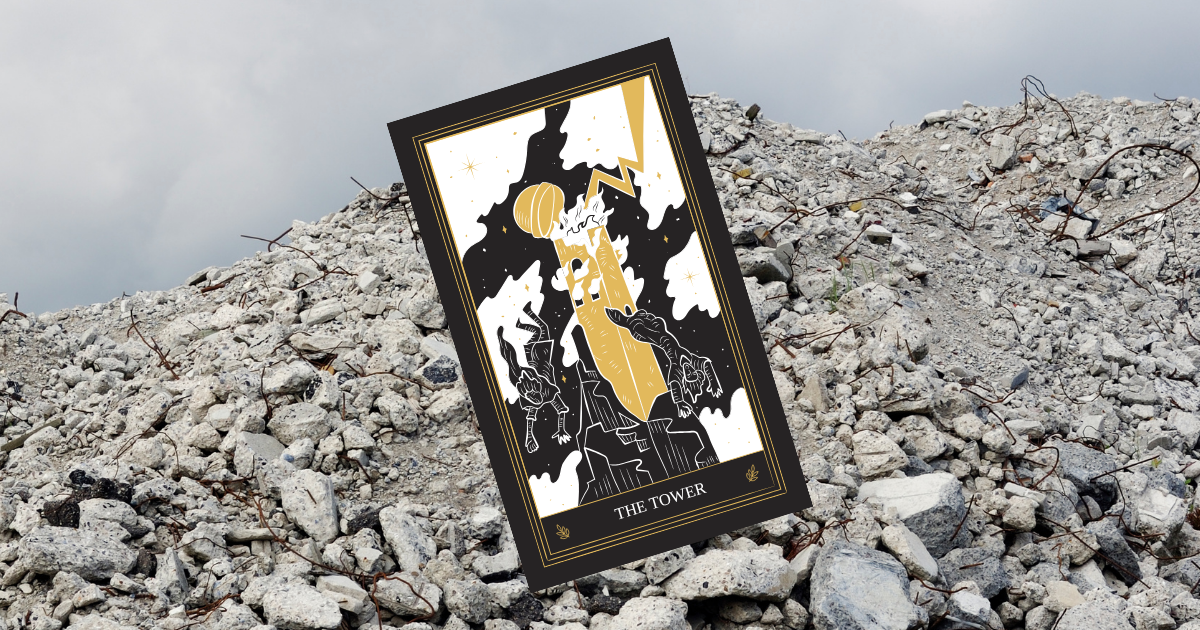
It’s the card everyone dreads pulling because it looks like disaster, or maybe punishment, of some kind. But the more towers I’ve lived through, the less I believe that’s what it actually means. I think the tower is honesty. It’s the moment when something that was not structurally sound (maybe it never was, or maybe it’s recently shifted) gets forced, finally, to show the cracks that were already there. So really, the lightning isn’t destroying anything. It didn’t create the instability; it just brings it to the surface and makes it so we can no longer ignore it.
Some towers fall in an instant, and some take their time. I’ve experienced both the sudden collapse and the slow crumbling, but the end result of both is the same: change. Space to transform and create something new.
This last tower—the health one—was the slow kind. There was no single lightning strike, no one moment I can point to a say that’s when it happened. It was just months of returning symptoms, doctor’s appointments, and learning to rest in a body that oftentimes requires some negotiation. It was becoming accustomed to the waves, and to the brain fog, thick enough some days to make writing feel like reaching for words through wet cement.
In many ways, it’s stranger than the instantaneous towers, because there’s a kind of grief that comes in installments instead of all at once.
But the slow towers still clear space, even without that big, catastrophic moment. The brain fog closed some doors, in that I couldn’t write the way I used to. But it also opened others. I found myself going back to old projects I’d shelved or set aside as I’d started new ones, only to rediscover half-forgotten stories that deserved to be on bookshelves instead of locked away on my hard drive. And somewhere in that foggy forced slowness, I began reconsidering the idea of self-publishing again, which is something I don’t think I would have revisited if my faster life had remained in tact.
My debut novel, When Stars Disappear, releases this October, and it exists, at least partly, because a tower fell slowly enough to show me a door I’d passed up a while back.
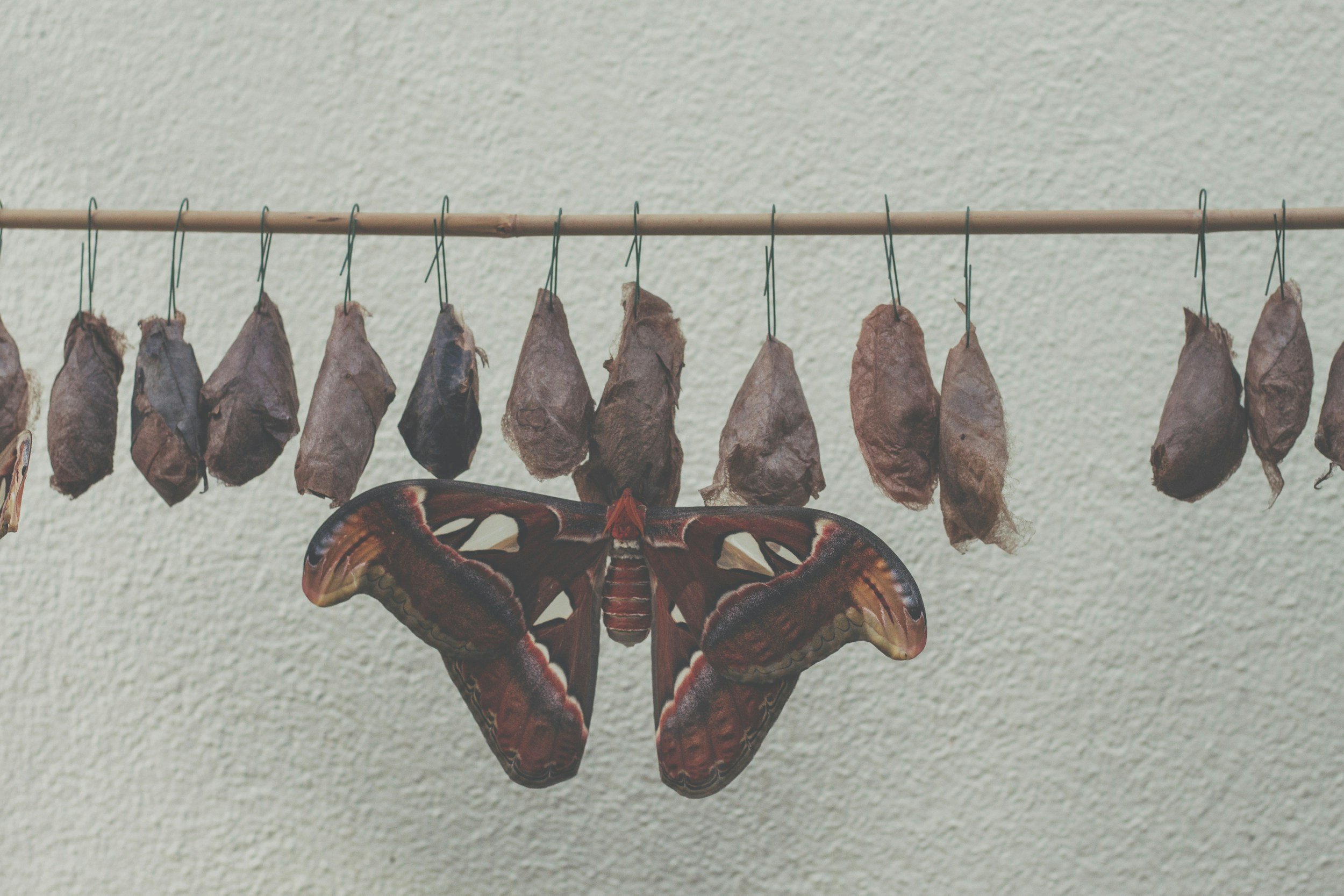
But this wasn’t my first tower. Not even close. I’ve joked with friends that my life has just been a series of tower moments, and with my Scorpio stellium, my astrology friends seem to think that’s just going to be a theme of my life. In some ways, I’ve come to treasure these towers, because I’ve had enough of them to know that what rises from the rubble is always better than what was torn down. I’ve become almost comfortable with the alchemical process of it, so I don’t fear the death and rebirth cycle nearly as much as most people seem to. I think of moths and butterflies, and how they must literally dissolve first, before they can emerge with their beautiful wings. We really can create whole new lives once the previous one has been dismantled, and we can take everything we’ve learned from the last cycle into this new one with us.
I consider this a gift.
That said, it isn’t ever easy.
In 2021, I left my ex-husband and moved out with my three kids. We had to get an order of protection, and though that wasn’t the first brick to fall from that tower, it’s the one that made the total collapse an instant one. After over a decade building a life with this person, the tower fell fast, and it fell loud. It was devastating.
I’d been isolated for a long time before I officially left. I’d become cut off, slowly, in that particular way that happens in a marriage where we don’t notice the walls going up until we’re already sealed inside. My body remembered and stored everything, even when my conscious mind didn’t, so I developed an autoimmune disease from the sheer sustained stress of staying. I was, in a very real sense, dying slowly, long before I packed the kids and a few bags into my parents’ car.
I did nothing creative for years in that marriage. I didn’t write—not a single poem or story. I even stopped journaling for long stretches of time. I didn’t pick up my guitar. I didn’t sing at full voice or place my fingers on the keys of my childhood piano, despite hauling it from house to house every time we moved. I stopped painting. Stopped sculpting. Stopped creating. I curled in on myself because there was no room for true expression. There wasn’t room for much of anything except survival, and I didn’t even fully realize this until long after I’d left.
The tower that was my marriage looked, from the outside, like a life. It had a house, a family, and a version of stability. And when I did notice cracks, I quickly dismissed them and launched an expert PR campaign that worked not only on others, but on myself as well. That tower was never load-bearing the way I wanted it to be, though. It was collapsing, brick by brick, long before the lightning of my leaving brought the whole thing down in a way everyone could see it clearly.
And when it fell—when I actually left—I lost the entirety of the life I’d spent my whole adulthood building. I married in my early 20’s and divorced in my late 30’s. That’s a lot of life to lose. But I didn’t lose everything, and I got so much back! I reconnected with my family. I found my old friends again, despite having drifted apart over the years as I became increasingly more isolated. And I started creating again. I cried the first time I sat down at my parents’ baby grand and realized my fingers knew exactly what they were doing still. When I sang at full voice and choked from emotion, my body opened the flood gates and allowed hope to pour out again, at last. Writing began calling to me not long after, because I finally had room in my body and my life to make something new, instead of just enduring.
I don’t think it’s a coincidence that these towers led me back to writing. Past ones have as well. I think that’s what towers do, if we let them. They don’t destroy us; they destroy the structure that was already quietly costing us our lives, whether that structure is marriage, a body with its own set of challenges, or something else. And in the falling, in the rubble, we suddenly find room for something that couldn’t exist while the old structure was still standing.
I’ve fallen enough times now to recognize what’s happening, even when I’m in it. I know the disorientation. I know the grief that arrives before the rest has a chance to. But I also know that the falling is only the beginning. I’ve watched myself rebuild before, and I have the confidence to know I can do it again. That doesn’t make it painless by any stretch of the imagination, but I think the trusting of the process makes the rebuilding even more satisfying each time. I’m even able to find some excitement in the anticipation of what’s being created in the newly-cleared space.
When Stars Disappear is, in its own way, built out of both of my most recent towers. The marriage had to fall so I could write again, and the health crisis fell slowly enough to hand me the space to finally publish it as part of the rebuilding.
If you’re in the middle of your own tower moment right now like I am, I don’t have a tidy lesson for you. I don’t think towers work that way. There’s no short cut around the falling, and if you’re still looking for the ground, all I can say with certainty is that it is coming, and you will survive the landing. You don’t have to know yet what will grow from that rubble, and you’re allowed to still be in the falling part. It takes as long as it takes. So does the rebuilding.
What’s a tower moment that cleared the way for something beautiful in your life? I’d love to hear about it, if you’re willing to share.