Book Review: I Who Have Never Known Men
I’ve had this book on my shelf for ages, but for whatever reason never got around to reading it. I think I was intimidated? Or maybe it’s that I was worried it wouldn’t live up to my grand expectations, based on the bits I’ve heard from other readers and writers. Whatever the reason, it took me a while. But now that I’ve read it, I’m kicking myself for not reading it sooner! Jacqueline Harpman truly created a modern literary masterpiece.
(Spoilers ahead!)
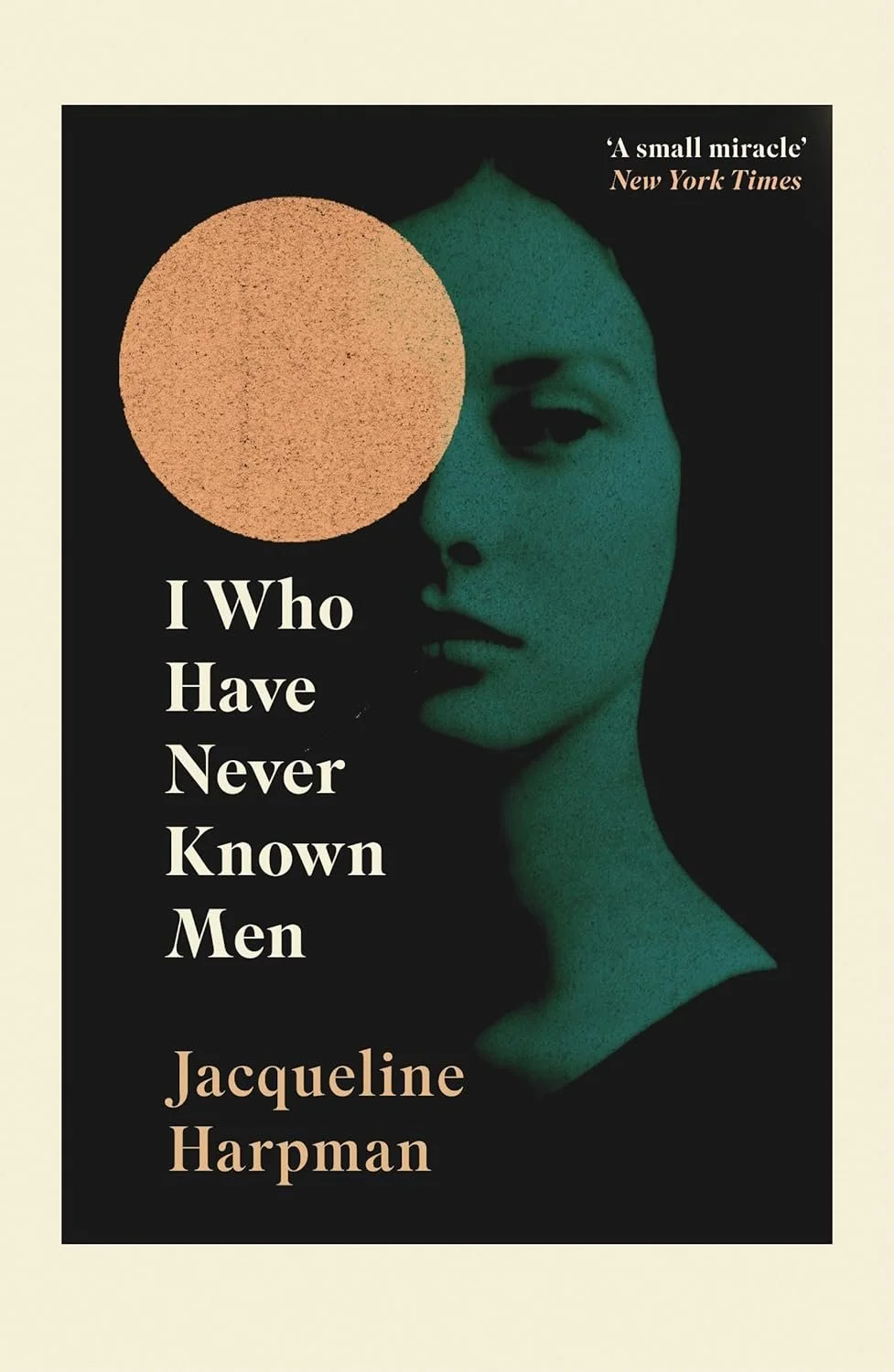
What’s it about?
A nameless woman (called only The Child) lives deep underground, imprisoned in a shared cage with 39 other women. They’re all older than her, but none of them remember much of life before their current circumstances, and they hardly ever talk about such things, as they’re watched over constantly by guards. Being underground, they have no sense of time, and go only on the schedule set for them by their captors, with the lights turning on and off to indicate sleeping and waking periods. The Child lives largely in solitude, despite the women being present, since she is so much younger and has little in common with the others. They’re not given any privacy whatsoever, are forbidden to touch, and cannot interact with the guards. They’ve found a sort of rhythm to life, cooking with what meager food and supplies the guards allow, mending their threadbare clothes, and having conversations that seem meaningless to The Child. But soon, they realize The Child may be the one to make their escape possible, and if they’re to survive the strange world above ground, they’ll need to learn to work with each other at last.
What I Loved
This is the kind of novel that makes me ask questions of myself in a way that not only allows the story itself stick, but gives me greater insight into my own mind moving forward. If you ask me, that’s the hallmark of an exceptional piece of literature.
The entire tone of this work is a bit unsettling, and we never get all the answers we might want. But that’s exactly what makes this book great to me. This withholding of a satisfying explanation or resolution is what makes it feel so true and honest. We watch The Child throughout the course of her entire life—through imprisonment and isolation, to tentative community with the other women, to a grand escape, to survival in a strange new world, to real connection, and ultimately back to isolation once more. Despite never knowing her name (beyond her being called The Child), I felt a deep and enduring connection with her. I wanted to know her. To see what happened to her. To understand her choices. To experience this unusual life with her.
It really is difficult to nail down exactly what I loved about this one, because it’s literally the overall story itself. It’s the way it’s written. It’s the melancholic, lonely feeling of it. It’s the expansive, life-spanning nature of it. It’s the way it still manages to feel intimate despite its scope. It’s everything.
What I Didn’t Love
If I can find even one criticism for this book, it is not my own. It’s what I imagine some readers might struggle with, and that’s the quietness of this novel. Despite its larger-than-life premise and enormous questions it asks of the reader, the story itself is really focused and granular. We’re with The Child for the entirety of her life, in her head the whole time. It’s much more about her journey as a person, and the hardships of every day life, than it is about the larger world elements. In fact, we don’t even get answers to those bigger questions, because they aren’t the point Harpman was making with this work. So, if the reader is hoping to understand what happened to get them here, or even concrete answers for where they are at all, they might leave the book disappointed.
Bigger Picture Stuff
Nothing The Child experiences parallels my own life. That said, since she is so profoundly different from myself, it allowed me to broaden my own perspective and deepen my empathy as I viewed this story through her eyes. I found myself asking questions throughout: Who are we, when everything we’ve ever known about ourselves is stripped away, as it was for the older women? Who are we when our only opportunity to form an identity is within a deeply restrictive and disconnected world, as is the case for the Child? How do we respond to such unbearable circumstances as imprisonment in a guarded bunker and attempted survival on a barren post-apocalyptic planet after escape? How do we create belonging and reclaim our humanity, even when it appears everything in our world is set to prevent or destroy both? How do we keep going, with such little hope for any kind of real future?
I love when a book makes me think deeply about existence, and forces me to reassess my own life, motivations, and ideals.
There is also a possible discussion about the nature of men and women, given the set up of imprisoned women being guarded by armed men. If anything, I think the author demonstrates that women are capable of creating rich, beautiful community with one another, even in the absence of men, and perhaps because of it.
But that wasn’t my big takeaway.
For me, it was more commentary on the human spirit itself, and how it survives against all odds, even if it looks a little different than we might imagine. It’s a story about resilience in the face of hopelessness. Humanity in the face of desolation. And ultimately, claiming agency, even when others (and the world) attempt to take it from us.
Final Thoughts
This was a devastating read.
Maybe it’s because I’m neurodivergent, or maybe it’s because I lived with depression for a good portion of my life, but I found The Child relatable despite the obvious difference in our life experiences. The loneliness and isolation throughout the novel made me ache for a hope and discovery that just simply never came. There were moments of life and beauty, for sure, but I’m grateful for the restraint Jacqueline Harpman showed in the way she wrote this story. I have a feeling it will remain with me for the rest of my life.
This is my first 5/5 star review for 2026.
I’d give it more if I could.
Happy reading!