Thoughts on Struggling
Lots of people around the world have tuned in for the 2026 Olympics, and the female athletes absolutely crushed it! More than the events themselves, I thoroughly enjoyed watching the women—their interviews, their sportsmanship, and their interactions with each other outside of the competition entirely. I felt a deep sense of pride watching them show up so authentically, and bring a fresh kind of honesty to the Olympics that I don’t think I’ve felt, maybe ever.
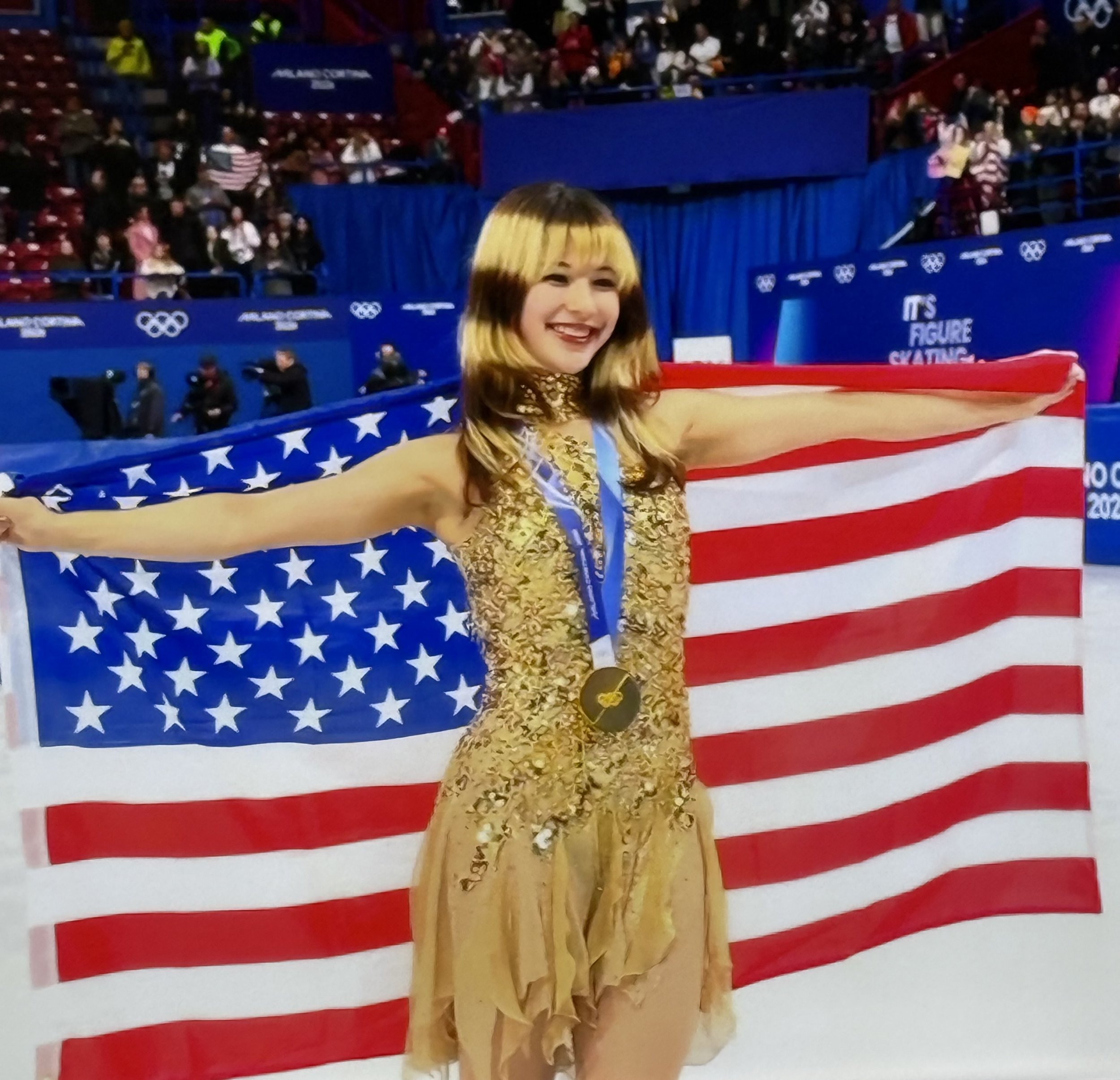
One of the themes that continued to stand out to me was the way they handled adversity, both during the events themselves and off screen. Alysa Liu made a huge come back to win Olympic gold after retiring at age 16. Amber Glenn openly talked about competing at the Olympics while on her period, and has been an advocate for mental health since before the games. On more than one occasion, Eileen Gu discussed how she rewires her brain for success. We love a woman who can talk about neuroplasticity while also crushing the half pipe! And Hilary Knight not only led the women’s hockey team through a heartbreaking and disappointing leaked locker room video from the men’s team, but had also already led the U.S. to another gold medal, all while sharing with media the ways she’s trained her mindset toward achieving these kinds of wins on the biggest stage in the world.
There’s a common message they all seemed to communicate in on way or another, and it’s summed up nicely by Alysa Liu. I have a feeling many of her fellow Olympians share this perspective.
“I love struggling, actually. It makes me feel alive.”
She loves struggling. Not many people feel that way, and I think that’s why this quote made headlines throughout Alysa’s time in Italy. That, and it so thoroughly matches the way she interacts with not only her sport, but her life. She was a constant source of positive energy for both her fellow competitors and the audience watching from home. It isn’t that she ignored the struggles she’s faced. Quite the opposite! She talked very candidly about why she left figure skating at the age of 16, and exactly what she required from the people around her in order to return to the sport she loves. Alysa took the time to figure out who she is and what she wants, and then set up the boundaries that would allow her to show up as the best version of herself at this year’s Olympics.
It worked.
The above quote, however, wasn’t necessarily discussing her outlook on life as a whole (though, I’d argue it applies to her overall mindset, too, based on interviews and other conversations I’ve seen with her). That quote came during a segment where Alysa was discussing her practice habits, and how she’ll often continue to work on her routine, even after her coaches have given her the thumbs up. She doesn’t need other people to push her; she does that well enough on her own. And that’s because she enjoys the struggle. It makes her feel alive.
Can you imagine what the world would be like if we were all able to approach difficult things with such a perspective? My daughter and I were talking about her this morning, and this topic in particular came up. My daughter turns 13 this month, and loves Alysa Liu. “She’s an alt baddie!” my daughter says, smile splitting her face, framed by her own color blocked hair, partially dark brown and partially bleached white/yellow. She loves how Alysa is funny and strong, and how she shows up authentically no matter who’s watching or what she’s doing. My daughter is almost giddy when she talks about Alysa Liu, and that makes my heart sing as a mother.
Every one of the women I mentioned—Alysa, Amber, Eileen, and Hilary—are women I’m glad my kids can look up to. They’re creating a world where this younger generation gets to see powerful women be kind, smart, strong, and funny… all while competing at the highest level. Not only do these athletes face the same challenges and struggles as anyone else, but they have overcome unthinkable odds to get to where they are today within their respective sports. I can’t think of a better example for my children.
And for us older folks, too.
Because let’s be honest—so many of us are still figuring out our relationship with the concept of struggle, aren’t we? I’ve often joked that my life is just one tower card after another (iykyk), so I’ve learned how to adapt to major changes, shifts, and complete reconstructions. As an undiagnosed neurodivergent kid, I struggled. Hard. And I didn’t always learn the best ways to manage. But over time, and as I got older, I was able to start doing the work that these young women at the Olympics already seem to have a firm grasp on: the struggle doesn’t feel so horrible when we view it as proof of life. In fact, we can start to welcome it, because we know that another bigger, better chapter will come from the growth hardship almost always brings (so long as we look for it and let it).
That said, suffering isn’t a requirement for success. Which is exactly why Alysa came back to figure skating on her own terms and in her own way. She realized she didn’t have to trade her authenticity and well-being for success. In so many ways, she’s proven that we can have a fucking awesome time, and we can just soak it all in, even when we’re doing things the world tells us are hard. It takes the pressure off!
Along those same lines, Alysa gave us another glimpse into her mindset, and I think it’s worth bringing into the conversation:
“I connect with everything, but I’m not attached to anything.”
This is a commonly-understood principle of non-attachment, which is a philosophy that often correlates positively with stable mental health. It’s the idea that we can be deeply present and connected to things, people, places, etc., but that connection does not lead to attachment or the inability to let go (whether that’s a letting go of the thing itself or our desired outcome). People who have adopted this philosophical approach often report that they are better able to act intentionally, rather than acting on impulse, because their decisions aren’t guided by craving, fear of loss, or other emotions that often derail us. It allows them to enjoy life to the fullest, while understanding the transient nature of everything we’ll experience along the way. Alysa demonstrated this for the world the entire time she was in Italy, always full of joy and looking like she was having the time of her life, just along for the ride.
I’m not sure I’ve mastered non-attachment myself, but it has been a natural progression of my healing and growth over the past decade. And I will say, learning to let go of outcomes has prepared me for a writing career, as I’m not as attached to the outcome as many of my fellow writers are. While I would love to have my books on shelves and in the homes of millions, I’m not attached to the idea. I’m deeply connected with my work and my process, and yet,query rejections don’t hurt nearly as much as I’d prepared myself for when I started this whole thing. I credit non-attachment for this. I’m able to be fully present and engaged while also having my identity and worth separate from any outcomes, which means I can have more fun doing what I love. It takes the pressure off.
Struggling is a part of life, but suffering doesn’t have to be, and life is so much better when we’re able to just live it.
Thank you Alyssa, Amber, Eileen, and Hilary, for being incredible women, and for doing what you love in such a big way. I wish you all the continued success. My daughter and I will be cheering you on from Arizona!